


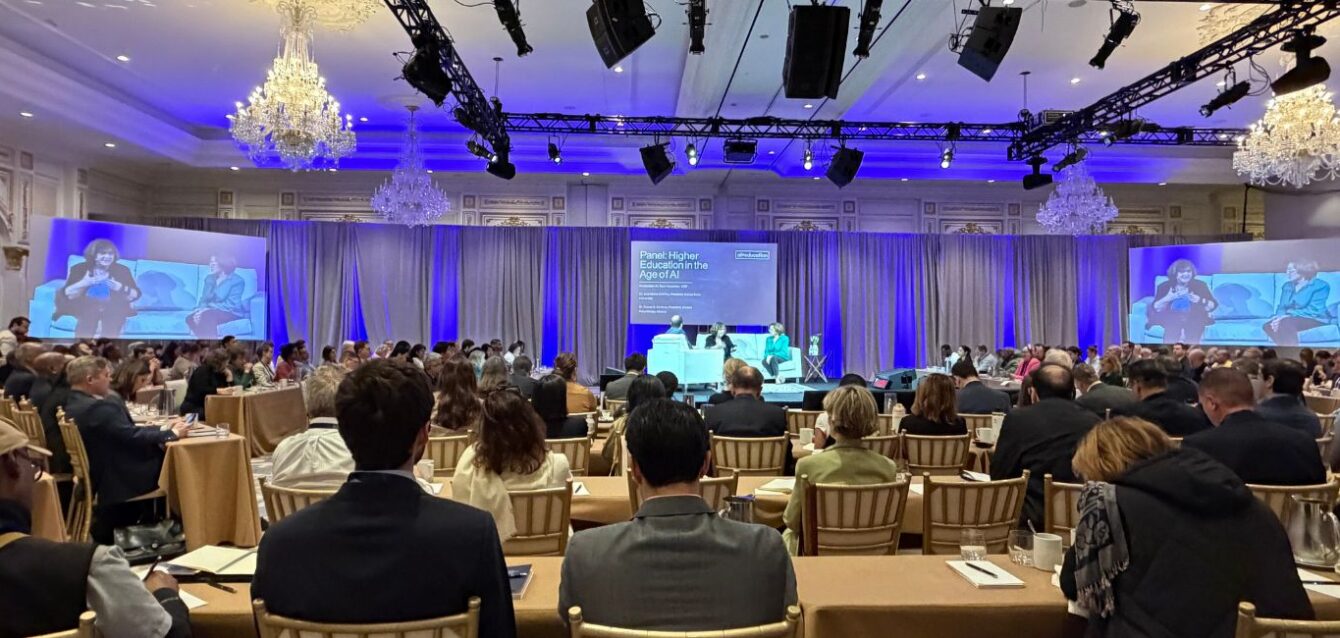
WASHINGTON — On March 11, the Mark Cuban Foundation joined national leaders in Washington, D.C. for the AI + Education Symposium, a gathering of government officials, educators, and industry voices confronting one of the most urgent questions of our time. How do we prepare the next generation for a world already shaped by AI?
The answer was more complicated than most people in that room wanted to admit.
A Country Without a Plan
The symposium drew a remarkable mix of voices, including Sen. Mike Rounds (R-SD) and Sen. Mark Warner (D-VA) working across the aisle on a new AI commission, NVIDIA co-founder Chris Malachowsky, Khan Academy founder Sal Khan, and more than a dozen other experts in government, higher education, and industry.
The conversations were substantive, but one uncomfortable truth kept surfacing. The United States does not have a clear, cohesive plan for AI in education. Countries like South Korea, China, and the UAE have already made AI education a mandatory part of their school systems. The United States has not. That gap is more than a policy problem. It is a threat to opportunity for millions of American students and to the country’s standing in the global AI race.
The Numbers Behind the Urgency
Speakers from LinkedIn and Microsoft brought workforce data that put the stakes in plain terms. Job postings requiring AI literacy skills have grown 70% year over year, according to LinkedIn’s economic graph. The skills required for most jobs today are projected to shift by 25% in just the next four years.
The most recent class of computer science graduates entered a job market with 9% unemployment in the field. Sen. Mark Warner raised the alarm that the number could climb to 30%, and soon. For students in countries where higher education is government-funded, that kind of disruption is painful. For students here, who take on significant financial risk to earn a degree, it could be devastating. The pipeline from college to early career is already strained, and AI is the disruptor. The United States wants to lead in the global AI race, but the systems to move students from the classroom into careers are not keeping pace.
The panel was unambiguous. This is not a tech sector problem. AI is reshaping jobs across every industry, and students entering the workforce today need more than technical skills.
Educator and mathematician Seymour Papert saw this clearly decades ago. “In many schools today, the phrase ‘computer-aided instruction’ means making the computer teach the child,” he wrote in his book Mindstorms: Children, Computers, And Powerful Ideas. “In my vision, the child programs the computer and, in doing so, both acquires a sense of mastery over a piece of the most modern and powerful technology and establishes an intimate contact with some of the deepest ideas from science, from mathematics, and from the art of intellectual model building.”
Where Progress Is Happening
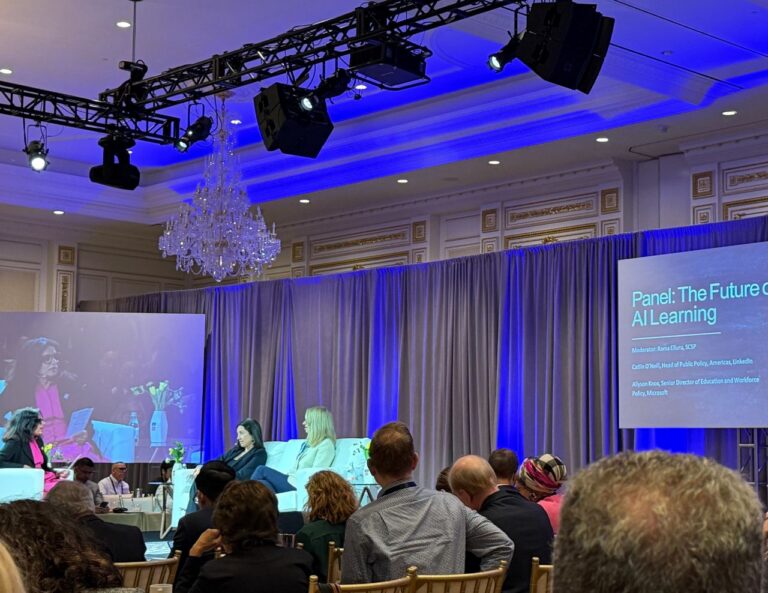
Not everything at the symposium was a warning. A Microsoft partnership with the National FFA Organization brought AI into a rural Virginia high school where students are building predictive models for plant health using real sensor data and machine learning, and doing it in a town without a stoplight.
On the policy front, a new initiative backed by Microsoft, Anthropic, and OpenAI through the American Federation of Teachers has committed to training 400,000 teachers in AI literacy over the next three to five years. Sen. Mike Rounds and Sen. Mark Warner also announced a bipartisan commission on AI. Prior commissions promised similar momentum and fell short of protecting children. Whether this one breaks that pattern remains to be seen.
The Gap No One Has Closed Yet
AI is advancing quickly, yet progress in AI education is slow and often low quality. There is not enough coordination between corporations, educational institutions and governmental policy. The next step is advancing a robust K-12 program that includes AI within computer science, teacher training, and a technical curriculum that goes beyond literacy to creative fluency, preparing students for a world that cannot yet be fully imagined.
Charlotte Dungan, Chief Learning Officer at the Mark Cuban Foundation, put it plainly. “The AI + Education Symposium was a call to action: AI is here, right now, infused in our industries and government. It is not going away. We are not adequately preparing students for the world with AI, and we must do better in a collaborative effort to ensure students have access to good jobs and are technically competent for the future of work.”
Stay informed on AI education news and updates about our AI Bootcamp. Sign up for the Mark Cuban Foundation newsletter.