

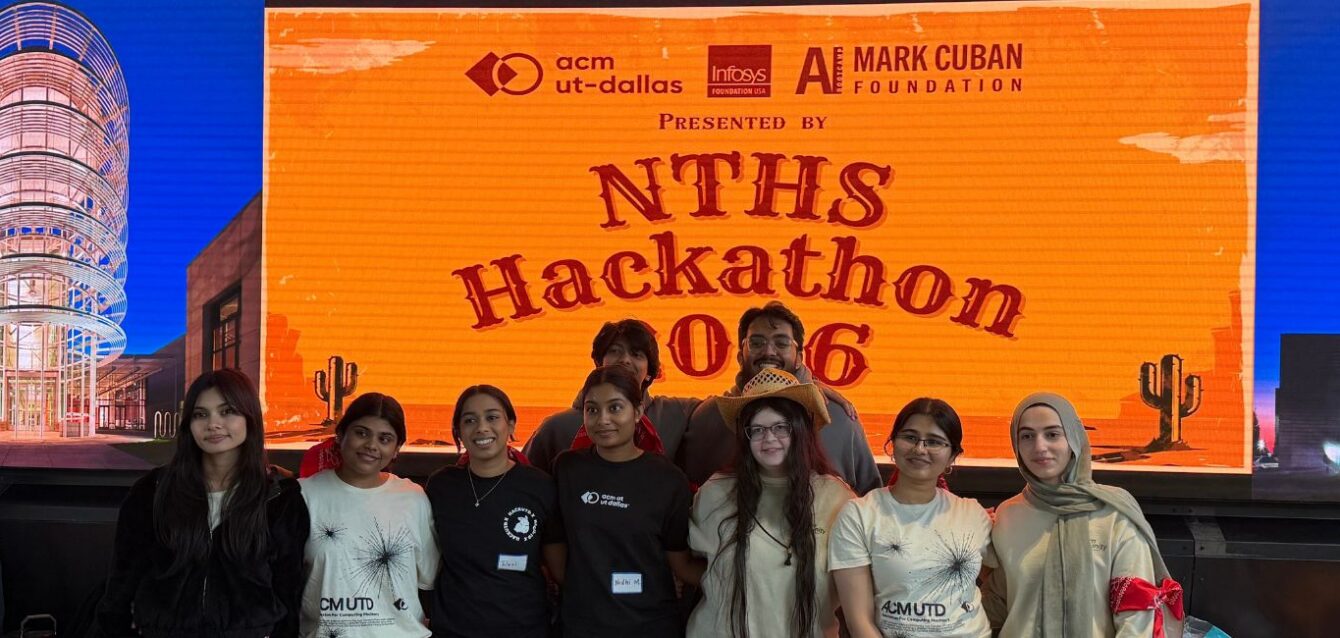
RICHARDSON, TX – On a Saturday in late March, over a hundred high school students gathered on the University of Texas at Dallas computer science campus carrying laptops, half-formed ideas, and fifteen hours to turn them into action.
The North Texas High School Hackathon, organized by UTD’s ACM student chapter with support from Infosys Foundation USA, drew participants from across the Dallas-Fort Worth area. The Mark Cuban Foundation sponsored its own track with a specific challenge: build a responsible technology project that improves life at home.
That word, “responsible,” carried some weight. The Mark Cuban Foundation ran a workshop on Responsible AI and Model Cards, asking students to think carefully about how their tools would impact society as a prerequisite to creating a successful project.
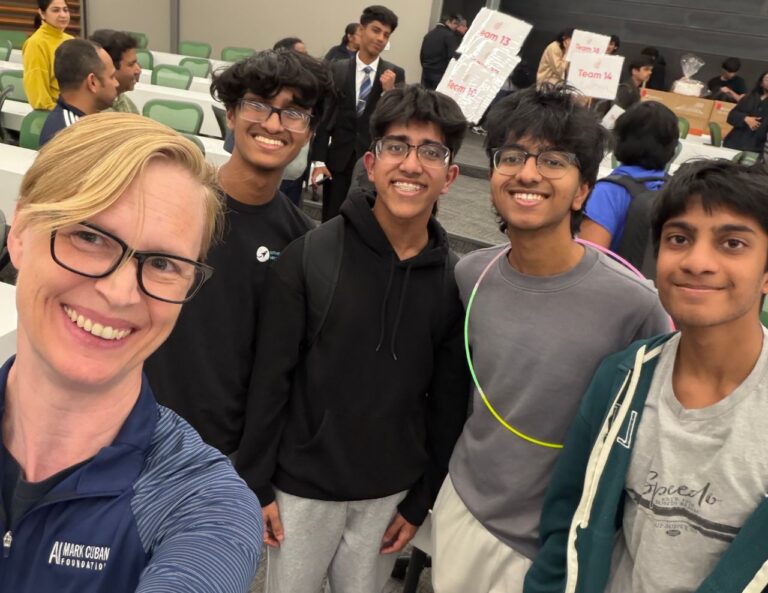
By the end of the day, the judging for the Mark Cuban Foundation Challenge was genuinely competitive. Teams presented solutions for friction points that most adults have learned to ignore; for example, one group built a tool designed to reduce conflicts between siblings, while another created an app that would compare grocery prices across multiple stores in real time, giving families a way to stretch tight budgets without driving across town. The winning team built an application that helps students and workers reduce eyestrain and improve posture while working at a computer, a problem that affects anyone who spends long hours at a desk and rarely thinks to address it until something hurts. The quality of the work, given the time constraints, surprised the judges in its technical complexity and working demo, thanks to the accelerating power of AI.
Students can build working prototypes faster than most adults expect, but a prototype is not a product, and an MVP built in fifteen hours is not a safe or scalable system. The distance between “it works on my laptop” and “it works for everyone who needs it” is still where technical expertise matters most, and closing that gap is the longer project the Mark Cuban Foundation has been working on for years.
The ACM student chapter at UT Dallas has supported AI Bootcamps since 2019, which means the college students staffing the event on Saturday were, in many cases, not far removed from the students they were helping. That proximity matters. A college student who took the same path two or three years earlier is a more persuasive argument for what is possible than anything a keynote speaker could say.
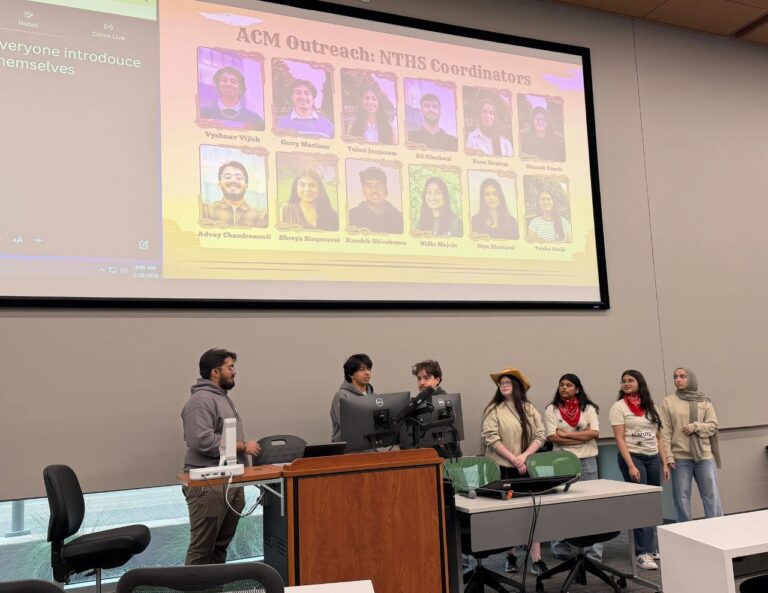
Hannah Rauch, a UTD student who served on the organizing committee, attended a Mark Cuban Foundation AI Bootcamp before enrolling at UTD. She described what the experience gave her in practical terms. “I’ve used my bootcamp learnings in hackathons and school projects,” she said. “And it helped with my college applications that I could talk about my work outside of school. It demonstrated my interests. It helped that my bootcamp was on a college campus. I could see the students and hear their perspectives beyond the campus tour.”
A campus tour shows prospective students buildings and dining halls. A bootcamp shows them what the people inside those buildings are actually doing, and whether they can imagine themselves doing it too. For a high school student trying to figure out whether computer science is the right path for their career, an in-person experience like the UTD Hackathon or a Mark Cuban Foundation AI Bootcamp can be life-changing.
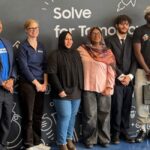
“Seeing students build with AI, support each other, and light up when they realized what they could do was so inspiring,” said Aisha Tahirkheli, an MCF Advisory Committee member and KPMG representative who attended the event. “Their work is a good reminder of what’s possible with hands-on experience, and how we can empower our future leaders.”
Infosys showed up on Saturday because they believe the students in that room are worth the investment. If your company agrees, the Mark Cuban Foundation AI Bootcamps give you a direct way to act on that. Your company provides the space. We handle the curriculum, the instructors, and student recruitment. Learn more about becoming a host organization and start the conversation with our team today.