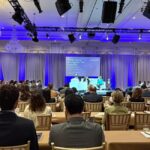


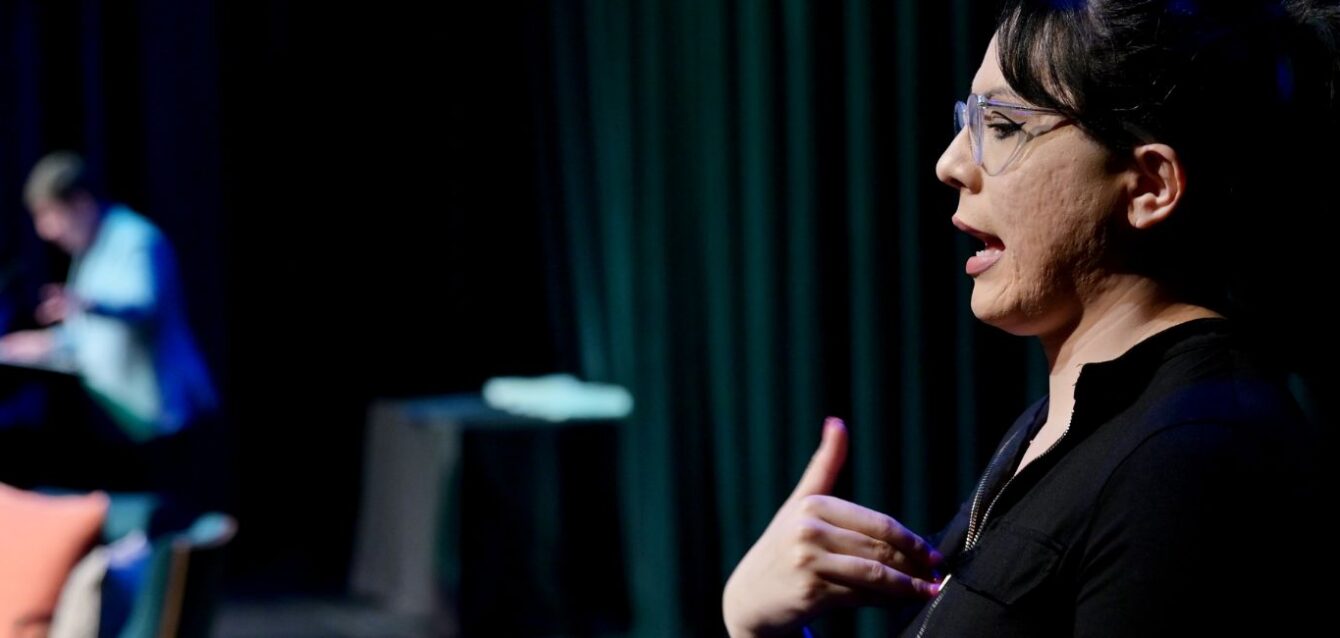
On February 6, leaders from across healthcare, wellness, sports, government and nonprofit organizations gathered at the Robinson Fine Arts Center for the North Texas Disability Chamber’s 2026 Annual Meeting and the inaugural Texas Disability Hall of Fame.
The daytime program brought together more than ten speakers representing institutions such as Texas Scottish Rite Hospital and Camp Summit, along with officials from the City of Plano, including Mayor John Muns. The message throughout the meeting was consistent. Accessibility shapes education, healthcare, recreation and civic life.
“The North Texas Disability Chamber’s 2026 Annual Meeting & Texas Disability Hall of Fame marks a pivotal gathering of advocates, leaders, and partners committed to advancing accessibility, equity, and inclusion across North Texas and beyond, catalyzing meaningful collaboration, driving sustainable systems change, and strengthening economic and civic opportunity for people with disabilities,” said Dylan M. Rafaty, President and CEO of the North Texas Disability Chamber.
Founded in December 2020, the Chamber serves as a regional nonprofit focused on accessibility, equity and disability inclusion. Its mission centers on community building, education and meaningful engagement between people with disabilities and those without. The Annual Meeting reflected that cross-sector approach. Speakers moved easily between topics such as pediatric care, adaptive recreation and municipal planning, reinforcing the idea that inclusion touches every system.
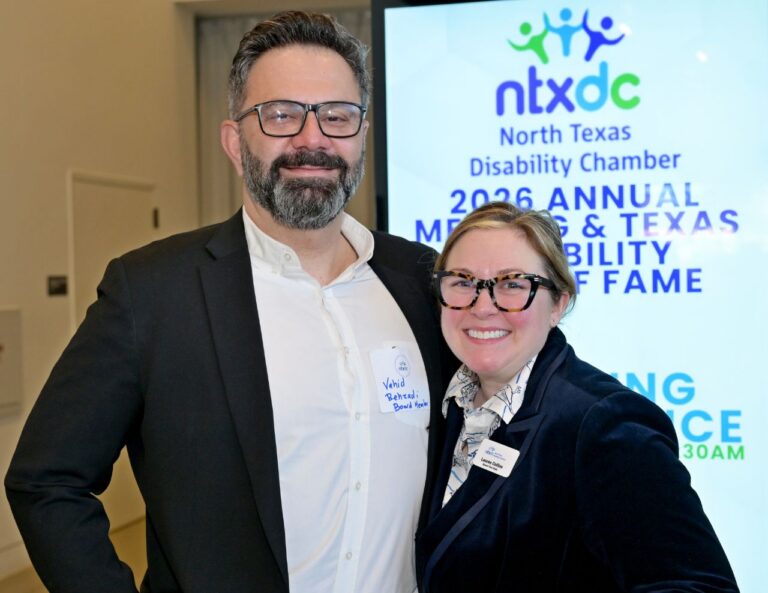
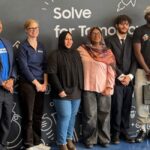
Vahid Behzadi, an Executive Board Member of the North Texas Disability Chamber, and Lauren Collins, an Executive Vice Chair of the North Texas Disability Chamber (Image via Sam Hsu Photography)
Designing With, Not For
For many in attendance, the most pressing question was not whether accessibility matters, but how to approach it in practical terms.
“Accessibility is not a service delivered to a community. It is a relationship built with a community,” said Nakoa D. Merritt, Community Engagement and Partnership Coordination at With Ministries. “I bring both professional expertise and lived experience as a parent of a child with Down Syndrome to this work, and that perspective reinforces the importance of designing with people with disabilities. When we all embrace with-ness as a strategy, not a slogan, we unlock a new perspective, innovation, strengthen trust, and create systems that work better for everyone.”
Her comments suggested something simple but often overlooked. Inclusion works best when people are invited into the process from the beginning, not asked for input after the decisions have already been made.
Abby Lautin, Manager of Development at Envision Dallas, described how that principle plays out in everyday digital practices.
“I wish more people in tech and business understood how often digital content is still inaccessible,” Lautin said. “PDFs and images frequently cannot be read by screen readers unless they include proper formatting and alternative text. When information is shared in inaccessible formats, people using screen readers can miss key details, limiting their independence and access to information. Small changes, like adding alt text and ensuring documents are screen-reader friendly, can make a significant difference in accessibility and inclusion.”
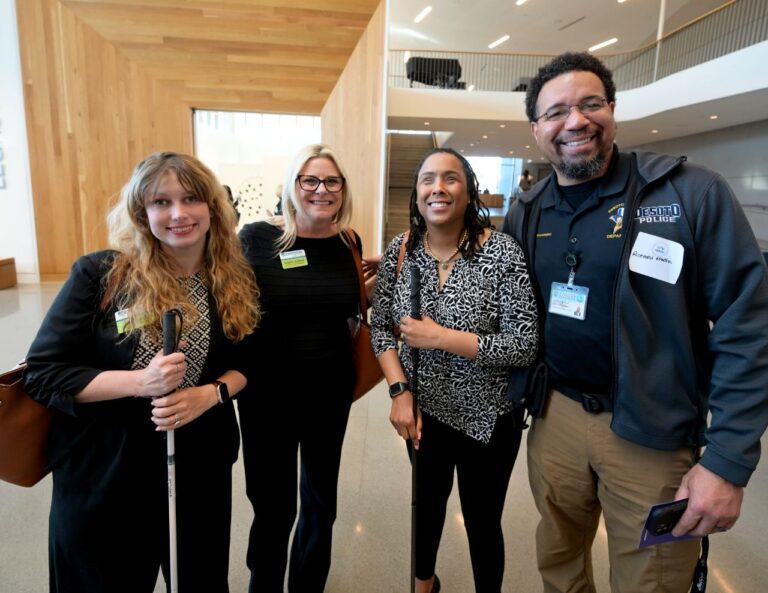
Abby Lautin and Robyn Jordan from Envision Dallas connects with Tiffani and Richard Martin (Image via Sam Hsu Photography)
A Conversation for the Bootcamp Community
Also in attendance was Tiffani Martin, founder of VisioTech and an executive board member of the North Texas Disability Chamber. Martin is a partner of the Mark Cuban Foundation AI Bootcamp and has worked closely with the organization to improve the accessibility of our website and other materials.
When asked how organizations like the Mark Cuban Foundation can help students view accessibility as part of innovation rather than an afterthought, Martin returned to the basics of design thinking.
“Design thinking is really about human-centered design. It starts with the human first. Too often, we treat accessibility as an add-on. We see it in procurement, in development, and in distribution. But what if we helped students think about the end user in all the multidimensional ways that could mean?” she said.
“People are not singular groups. I think young people, especially, are looking through the lens of youth. They are not always thinking that one day they will be older and might benefit from the tools they are building now. If we can get them thinking about people with different abilities and how the utility of what they create can be broadened, I think that would really help.”
Stronger Together
The meeting also provided space for nonprofit leaders and families to reflect on the importance of gathering in person.
“Events like this matter because they remind us that none of us are meant to do this work alone,” said Portia Hester Dawson, Founder of The Not Forgotten 1st, Inc. “Being in a room with other advocates, families, nonprofits, and leaders who share a common purpose creates space for connection, collaboration, and renewed resolve. For organizations like The Not Forgotten 1st, gatherings like this are vital. They allow us to listen, learn, and better understand the broader landscape: what’s working, where gaps remain, and how we can support one another more effectively.”
She added, “Advocacy can be isolating, especially for families who have been navigating systems for years, often without clear guidance or support. These events reinforce that we are stronger together. These events also keep in front of us that our shared goal is not just services, but access, inclusion, and belonging. Ultimately, events like this strengthen the disability community as a whole. They remind us that progress happens when we show up together, lean on one another, and commit to ensuring that no individual or family feels unseen, unheard, or forgotten.”
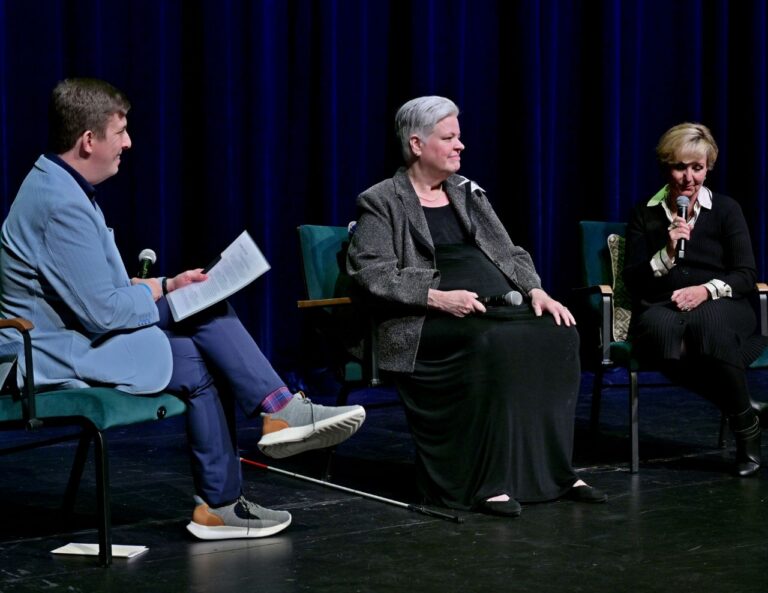
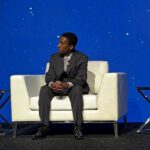
Dylan M. Rafaty moderated a fireside chat between 2026 Texas Disability Hall of Fame inductees, Neva Fairchild and Charmaine Solomon (Image via Sam Hsu Photography)
Honoring Leadership
The second half of the program marked the inaugural induction into the Texas Disability Hall of Fame. Charmaine Solomon, Neva Fairchild and Clay Boatright were recognized for decades of leadership and advocacy.
During a fireside chat, inductee Neva Fairchild spoke about supporting people with disabilities in defining their own futures.
“The most important lesson I’ve learned, and I’d like to pass on to you, is meet people with disabilities right where they are. Accept them the way they are. Help them to get to where they want to go, not where you want them to go. And when they don’t know how to dream, help them learn to dream,” she said.
“Every mother and father who have a child have a dream for that child. When the child gets older, they’re old enough to dream for themselves. But people with disabilities often get lost in the dreaming process. Help them to dream.”
Her message resonated beyond the ceremony. For educators, nonprofit leaders and technologists alike, it was a reminder that access is tied to aspiration.
At the Mark Cuban Foundation, we help students learn about artificial intelligence and new technology. Events like this one are a good reminder that accessibility should not wait until the end of a project. It belongs at the very start.