


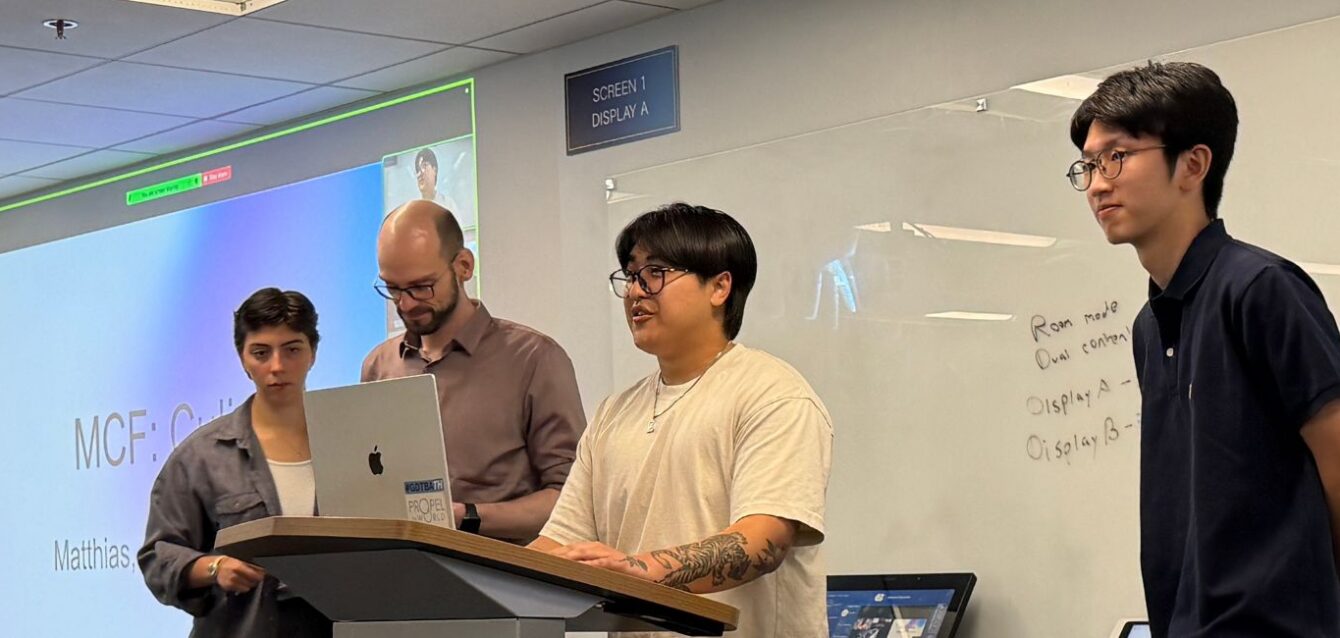
Graduate students at the University of North Carolina at Chapel Hill discovered that testing their teacher-evaluation tools with real K-12 classroom teachers led to sharper feedback and faster progress. At the same time, teams who began with non-teacher adults as testers struggled at the start of the product development cycle to revise tools effectively.
This insight emerged over the course of the yearlong project with the Mark Cuban Foundation, which ran from fall 2025 through spring 2026 and shaped the final tools that students presented on April 16. It also became one of the central takeaways for Charlotte Dungan, the Foundation’s representative on the project.
“I think students would agree that testing with actual classroom teachers makes all the difference,” Dungan said. “If ed tech providers are not testing with teachers who are in classrooms, their products won’t serve the demographic.”
The project ran through EDUC 789, a course in the Master of Arts in Educational Innovation, Technology, and Entrepreneurship program led by Dr. Todd Cherner. Student teams built scorecards aligned to seven high school subject areas. These included language arts, mathematics, science, social studies, physical education, art, and career and technical education. Each scorecard lets teachers compare outputs from different LLMs. Teachers then judge whether a generated lesson plan meets academic standards, applies sound learning theory, and would function in a classroom setting.
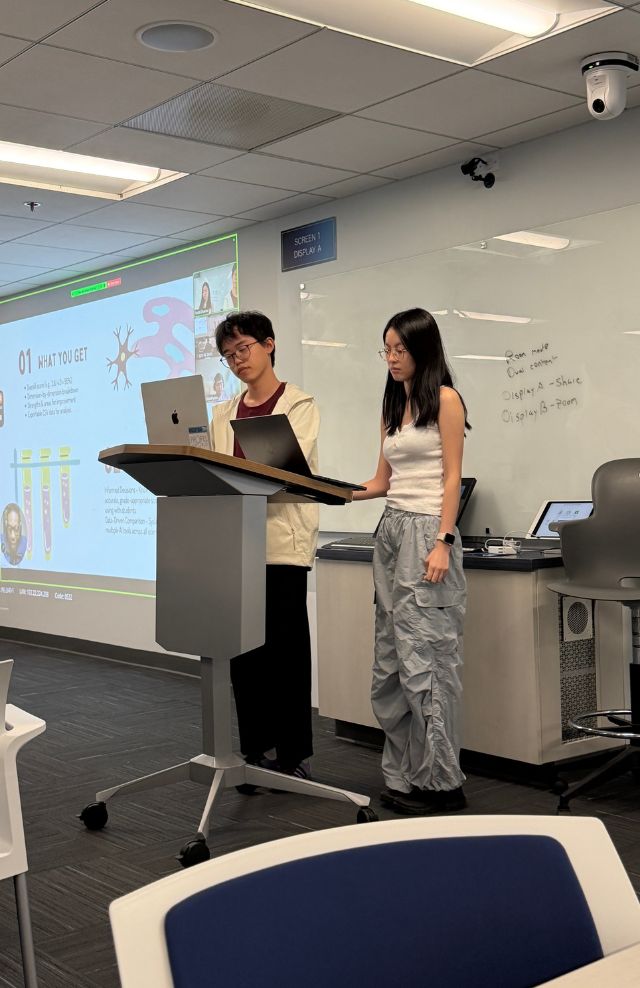
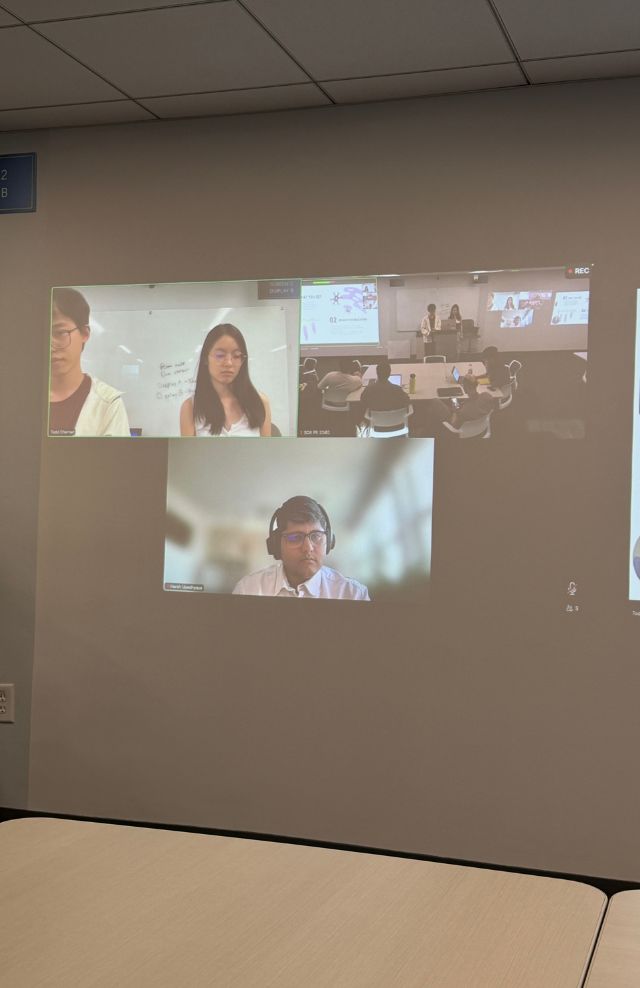
Dungan, of the Mark Cuban Foundation, served as the client and visited the class three times across the academic year. Her first visit, in fall 2025, was an introductory session. She walked students through a lesson drawn from the Foundation’s teacher fellowship and bootcamps. This gave them firsthand exposure to the problems their tools were meant to solve. She returned in early spring 2026 to give feedback on prototypes and again on April 16 to receive the final deliverables. Harshvardhan Upadhyaya, the Foundation’s Education Program Facilitator and a graduate of the MEITE program, joined the final session remotely.
Dr. Cherner said the project gave students a chance to do work that mattered outside the classroom. “University collaborations are essential for graduate programs that prepare students for professional jobs. Having this opportunity to develop scorecards to assess the quality of AI-generated lesson plans provided MEITE students an authentic opportunity to do professional-level work that supports teachers. This opportunity truly aligned with the mission of MEITE and the work of the Mark Cuban Foundation.”
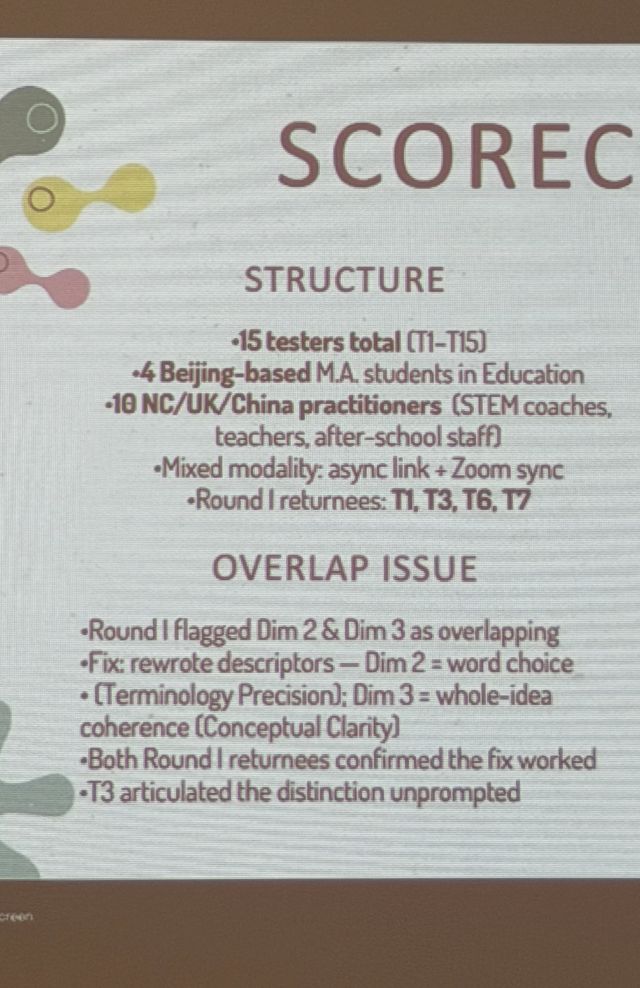
In the fall, students focused on prototyping. They started by pulling academic standards from sources such as Common Core and the Next Generation Science Standards to anchor their scorecards. In the spring, they entered the design phase, where students used Claude to prototype their interfaces, followed by their first round of user testing.
That round led to a divergence in the quality of feedback. The groups that worked with practicing teachers came back with criticism specific enough for action. The groups that worked with adults in other professions could not get the high quality input they needed, and those teams faced the most rework heading into final revisions.
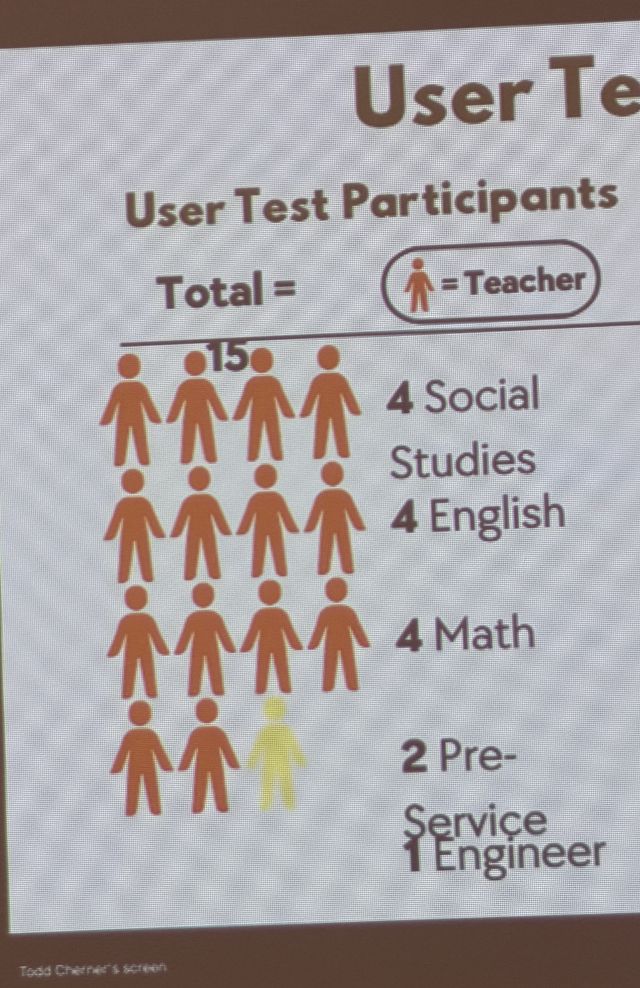
One team’s recovery from a weak first draft impressed Dungan. The team realized the initial design failed and received harsh early feedback. Instead of defending the original concept, the students rebuilt it. By the final presentation, they had iterated on the tool several times and produced one of the strongest projects in the class.
“I think that sometimes we get stuck in our initial first ideas,” Dungan said, “and I think the lessons they learned are going to be really valuable for their future.”
According to Dr. Cherner, design thinking led students to keep iterating, even when early prototypes fell short. The original charge, building a tool to evaluate LLM output, allowed them to pursue many approaches. Foundation staff, classroom teachers, and other users gave ongoing feedback that kept students motivated as the work narrowed.
The Mark Cuban Foundation plans to bring the student-built scorecards into its teacher bootcamps and fellowship programs in fall 2026. Educators will use them to evaluate AI tools for classroom use.
The UNC partnership fits a pattern the Foundation actively pursues, building pipelines that move young people from educational opportunities into careers with embedded AI technologies. Upadhyaya, who joined the final presentation virtually, is one example. He graduated from the MEITE program, was selected for an internship with the Mark Cuban Foundation, and is now in a full-time role at InnovateEDU. The MEITE students represent the next link in that pipeline, graduate students who will go on to build the classroom tools that future teachers and students will use. Dungan said she hopes other ed tech organizations will invest in similar pathways, and that they will pay classroom teachers fairly when collecting feedback on their products.
For high school teachers who want to bring AI into the classroom, the Mark Cuban Foundation Teacher Bootcamp is a free, virtual 10-session program that gives high school educators a foundation in AI, practical strategies for classroom integration, and a community of teachers working through similar challenges. The 2026-2027 cohort will take advantage of the tools MEITE students built for them. Sessions run monthly so teachers can learn AI alongside their existing workload, and educators who attend at least seven of the 10 sessions receive a certificate of completion.
To learn more about the Teacher Bootcamp and get the first word when applications reopen, visit the program page and sign up for the teacher newsletter.