


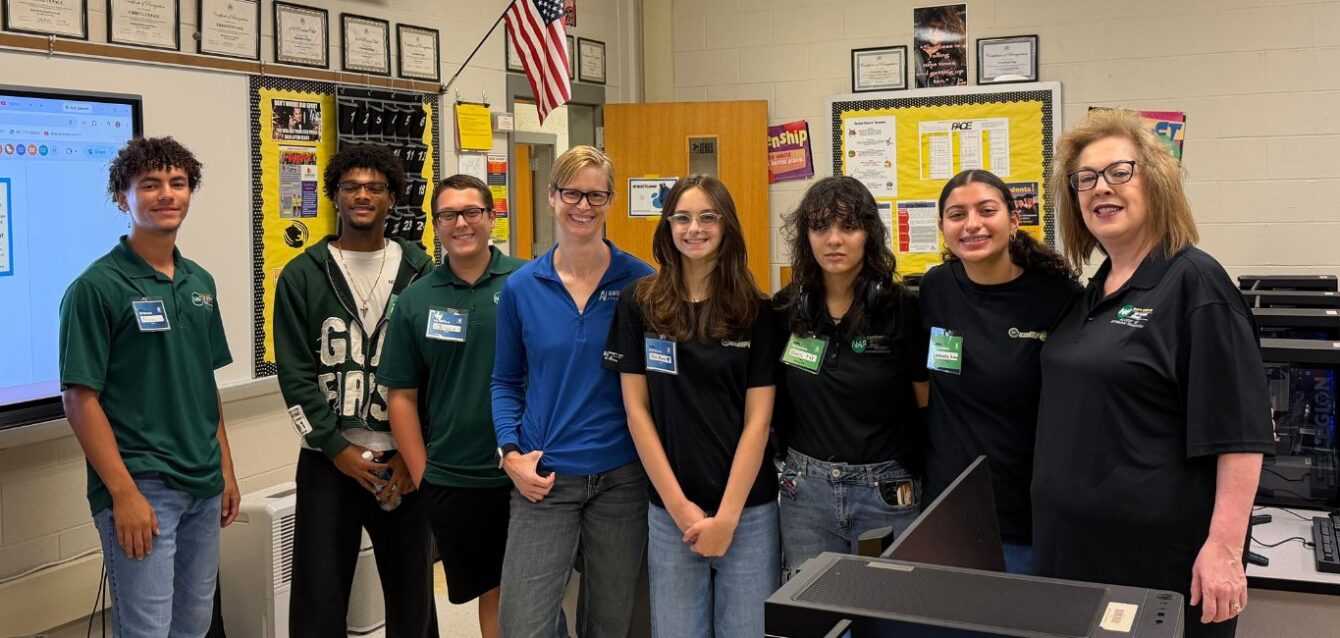
Thirty-two high school students spent four days in July building with artificial intelligence at Gray’s Creek High School in Fayetteville, N.C., in an AI bootcamp designed and run by two Mark Cuban Foundation AI Teacher Fellows and taught in large part by upperclassmen who were hired to lead their younger peers.
The program ran July 20-23 and was the first AI bootcamp built by Teacher Fellows rather than by the foundation and a corporate host site. It was also the first bootcamp of any kind in this part of southeastern North Carolina, where a large share of families are connected to nearby Fort Bragg.
Amber House, director of the Academy of Information Technology at Gray’s Creek, was the lead architect of the week and built it with ShaKira Hodges, a Mark Cuban Foundation Teacher Fellow and Career Development Coordinator for Cumberland County Schools. House is in her fourth year at the high school, after 10 years teaching at Gray’s Creek Middle School next door.
Several of her students applied to the foundation’s student bootcamp last year and were not selected because they were outside the selection radius from the host company.
“They were heartbroken, and it was difficult to watch such motivated students miss out on an opportunity simply because of where they lived,” House recalled.
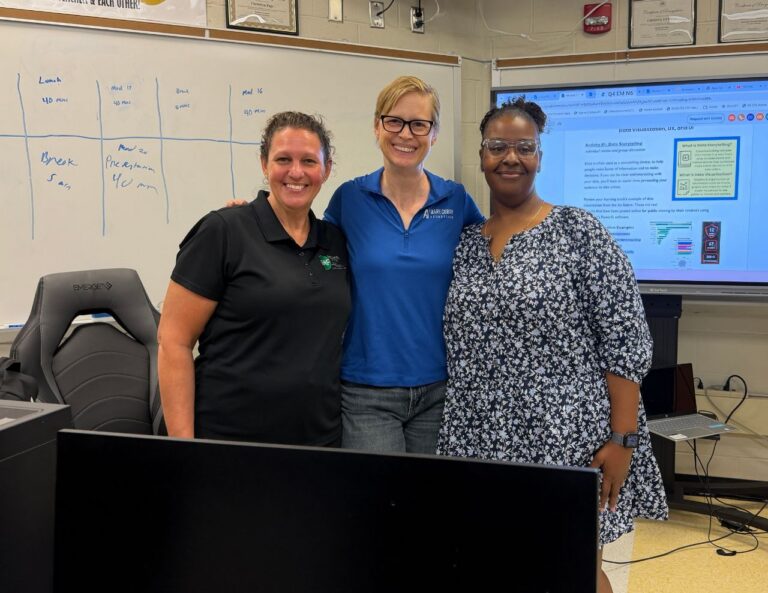
Amber House, Charlotte Dungan, and ShaKira Hodges
When funding came through for her second annual summer coding camp, she decided to try something other than what she had already run and asked the Mark Cuban Foundation about a partnership. “I figured I would never know unless I asked, so I reached out to Terri and Charlotte,” she said, referring to foundation staff members Terri Eichholz and Charlotte Dungan.
The geography is the whole problem, in her telling. “Our students in southeastern North Carolina don’t have the same access to major technology companies and career-connected learning opportunities that students in the Research Triangle Park area often do. I wanted to help level the playing field by bringing those same high-quality experiences closer to home.”
Students did most of the teaching. Upperclassmen were trained and paid to run sessions for underclassmen, which widened the number of teens the camp could serve while handing the older ones a real leadership assignment. The facilitators came from the NAF Academy of Information Technology at Gray’s Creek and from the academy at Pine Forest High School.
“Our facilitators are not selected simply because they are strong technology students,” House said. “They earn the opportunity through their character, professionalism, dependability, and willingness to serve others.”
Dungan witnessed their dedication to a high quality program in action. “The student leaders led the lessons well and engaged each student as they created a project that interested them. They asked for support from adults when needed and worked hard to ensure a high quality experience for every participant. These students ran a fantastic AI Bootcamp for their peers, demonstrating youth empowerment in action.”
Academy students spend the school year on work-based learning, contact with industry, leadership assignments and NAFTrack certification, all of which prepared them to stand in front of a room in July. “Watching them grow from learners into leaders has been one of the most rewarding parts of this experience,” Amber added.
Student teams spent the week on AI projects aimed at problems they had seen around them.
“Rather than creating technology for the sake of technology,” House said, “many of them focused on using AI to solve real problems and improve the lives of others.” She has encouraged the teams to keep refining their work past the end of camp and to consider submitting it to the Presidential AI Challenge.
Her own verdict on the week was brief. “I am in absolute awe of these students.”
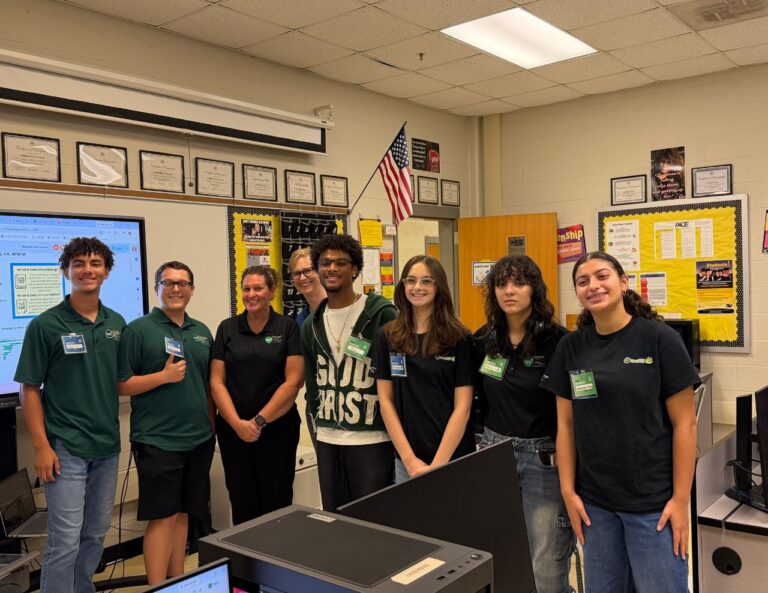
Charlotte Dungan and Gray’s Creek High School students and mentors
Dungan, Mark Cuban Foundation’s Chief Learning Officer, attended as a guest and said every student in the room was involved in the work. One group is weighing a presentation at the 2027 AI Student Symposium. Another student spent part of the week working out how to publish an app in an app store, and Dungan sat with her long enough to get her started and to leave her with resources for the roadblocks ahead.
That military connection shapes how House talks with families about camps like this one.
“Being located near Fort Bragg means many of our students are part of military families who have experienced frequent moves, school transitions, and changes in community,” she said. “That has made me even more intentional about creating a program where every student feels welcomed, supported, and connected from day one.”
She tells families that technology work travels, which carries weight for students who may relocate several more times before they finish school. One student asked Dungan about cybersecurity and AI in the military, and she told him the armed forces are looking for technical soldiers and may send him to college for the degree he wants.
House credited the Mark Cuban Foundation, Cumberland County United Way, the Youth Growth Stock Trust, community partners, her student interns and the families who sent their teens for the week. She wants the bootcamp to become a summer tradition in Cumberland County, and she wants other educators to consider putting their own students in the teaching role.
“When we give young people meaningful opportunities to lead, they often exceed every expectation,” House said.
Applications for Mark Cuban Foundation AI student bootcamps are open Aug. 1 through Sept. 30. Students in grades nine through 12 can find host sites and the application at markcubanai.org/students. Teachers can learn about the foundation’s professional development program at markcubanai.org/teacherbootcamp.