


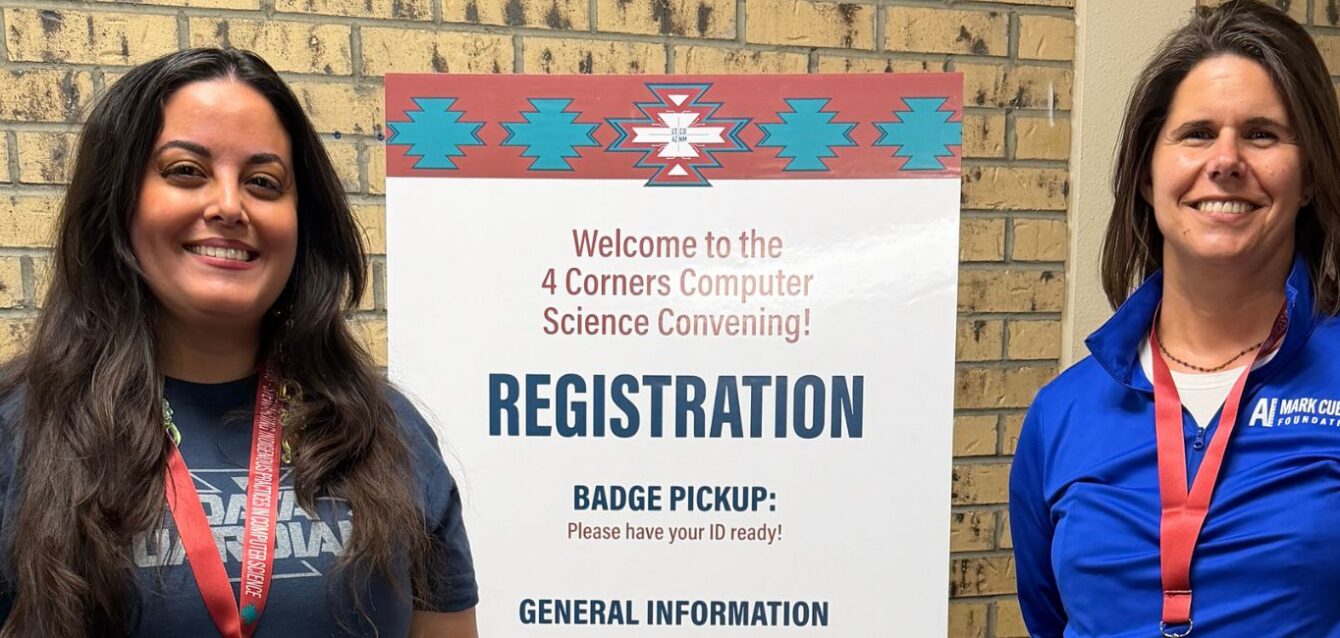
One educator arrived in Durango with a problem that had nothing to do with theory. He was still new to artificial intelligence, and the internet at his school cut in and out. When he raised it during one of the sessions, teachers offered ideas and practical help one after another until the discussion turned into a group effort focused on his class. That kind of exchange ran through the 4 Corners Computer Science Convening, which took place July 9-11 at Fort Lewis College in Durango, Colorado. Organized by AISES and a steering committee, it fit well at Fort Lewis. The college is the only four-year public school in the Four Corners region and has a long history of serving Native American and Alaska Native students. This year’s gathering, built around the theme “Data Guardians,” focused on stewarding Indigenous practices in computer science and drew teachers from tribal communities across the West, along with others who support the work. Among the speakers were Michael Running Wolf and educators from the Fort Lewis College School of Education.
The Mark Cuban Foundation took part through Wren Hoffman, a learning experience designer who led a session called “Whose Words Shape the Machine? Prompting AI for Cultural Relevance.” Hoffman built the talk around a plain fact about how these tools work. Large language models learn from the text they are trained on, and that text carries the biases of its sources while holding very little about tribal peoples or their languages. Her point was that a carefully written prompt can elicit better, more accurate answers from a model that was given almost nothing to begin with.
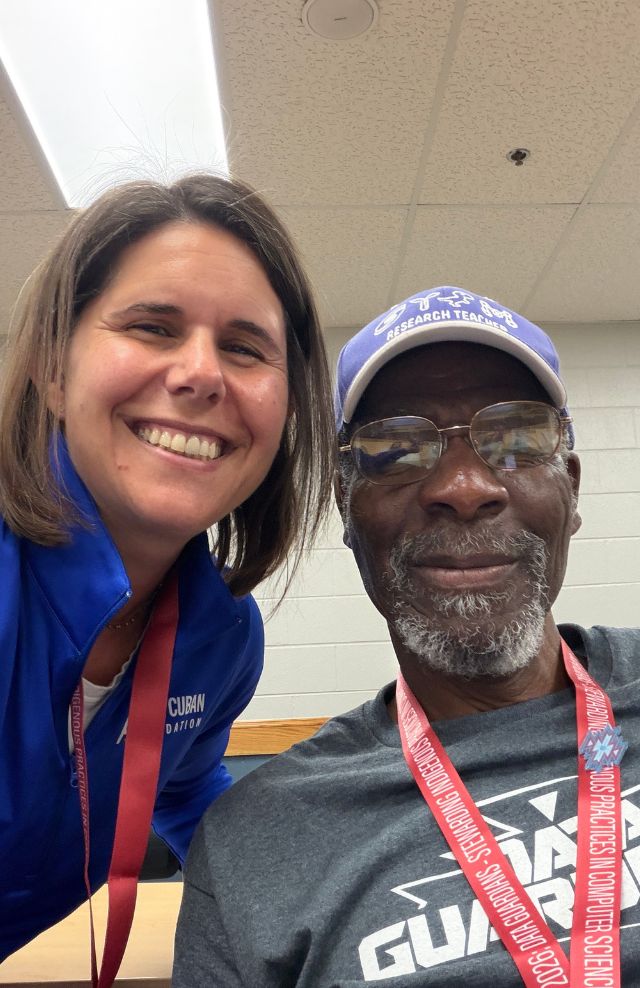
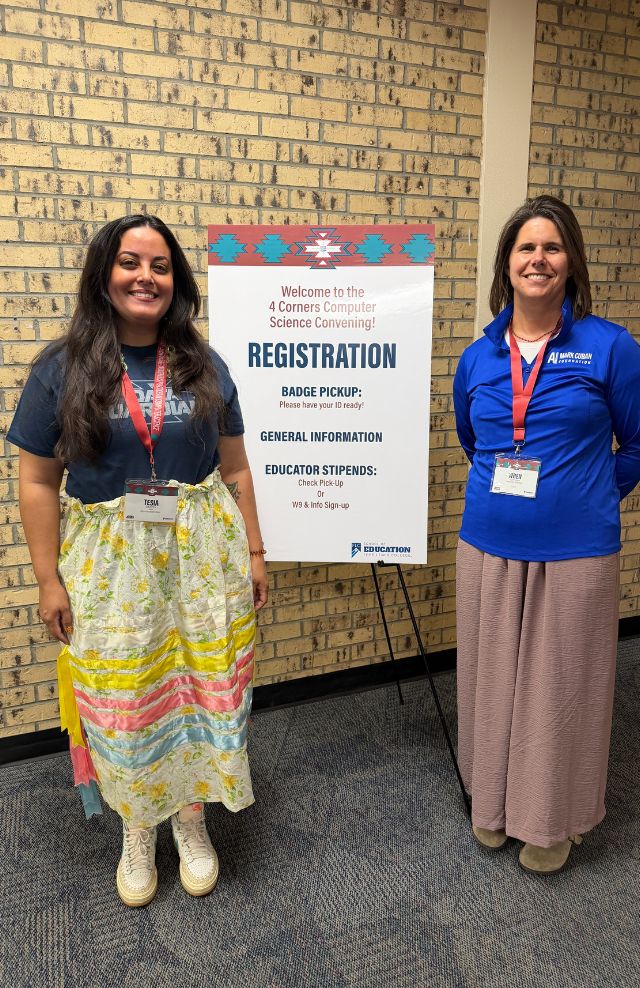
Left: Wren and Mark Cuban Foundation Teacher Fellow, Nate Raynor. Right: Wren Hoffman and Tesia Zientek.
The premise led straight into a harder question, one that participants kept returning to. Some argued that large language models should not hold tribal knowledge at all, because that knowledge is sacred and belongs to the people who carry it. Others pointed to what happens when it is left out. A model with nothing accurate to draw on invents answers instead, and people walk away believing things that are flat out wrong. No one settled the question, and the group was left to sit with it. “Power is in the language,” one participant said during the discussion.
Artificial intelligence was not confined to Hoffman’s room. It came up in nearly every session on the agenda, and the educators fell into two loose groups. Some were just getting started and wanted help finding their footing, while others already worked with the tools and were after what comes next.
For the Mark Cuban Foundation, the reason to be there was direct. Its programs are meant to reach every kind of learner, but that promise falls short if they pass over students in remote areas whose cultures and traditions differ from those of a typical applicant. Hoffman went to Durango to share what the foundation has built and to hear from Indigenous educators about what they need from it. In her view, these teachers and their students are at real risk of being left out of the shift toward AI, which is why she believes their needs deserve at least as much attention as anyone else’s. While there, she also connected with Nate Raynor, a Teacher Bootcamp alum and current Teacher Fellow.
Whatever they made of the machine, the educators came back to the young people in front of them. One of them put it plainly, that the work is helping students “prosper without forgetting who they are.”
To learn more about the Mark Cuban Foundation and its work bringing AI education to students and teachers, visit markcubanai.org.