


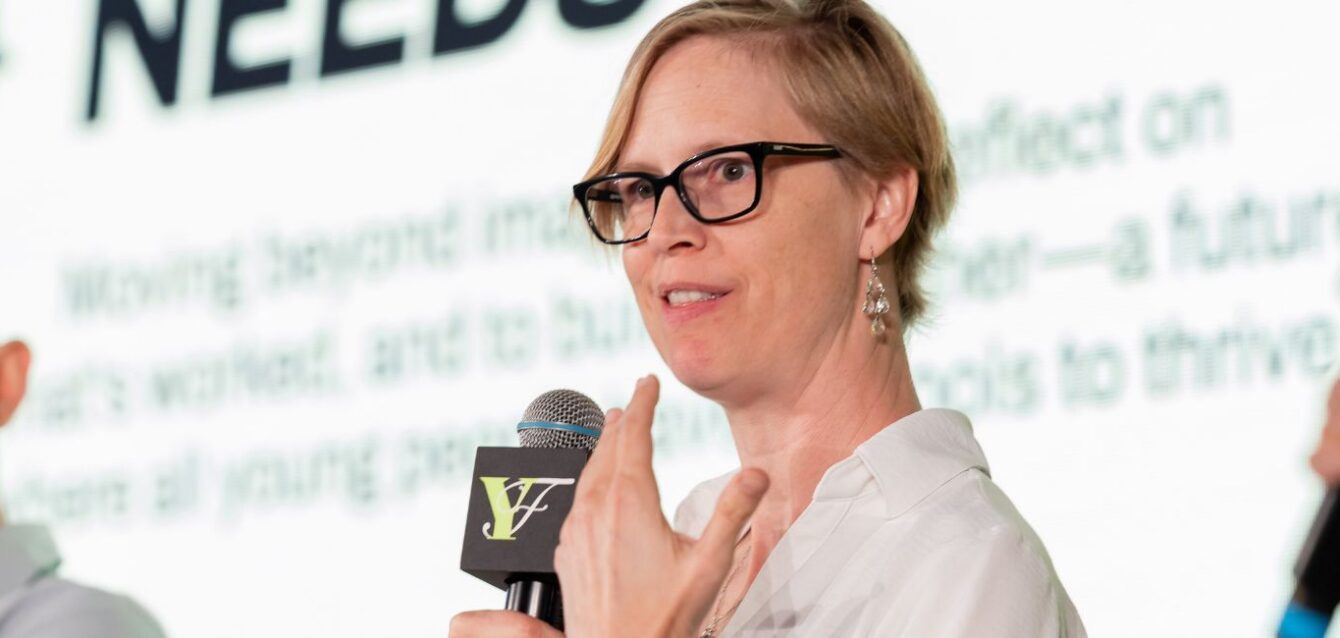
Charlotte Dungan and Terri Eichholz from the Mark Cuban Foundation spent two days in Austin with peers building tools, programs, and opportunities to empower the next generation of teens at the inaugural Young Futures Block Party.
The May 13 and 14 event brought together cohorts from Young Futures’ five-year initiative to support 500 nonprofit leaders working with teens and pre-teens across the country. Pinterest, Hopelab, and Pivotal partnered with Young Futures to host the gathering, which drew innovators from groups including The Center for Digital Thriving, KQED Teach, AISES Auntie Tech Collective, and Code Girls United AI Academy. Dungan attended as a Young Futures grant recipient and member of the “Oops! AI Did It Again” cohort.
Programming opened the evening of May 13 with a mixer and dinner at Austin’s Arlyn Studios, a recording space known for its history with creative musicians. Cohort members met one another while listening to The Real Young Prodigys, a hip-hop group from Young Futures grantee Hip-Hop N2 Learning. Ryan Star also performed an acoustic rock set that set the tone for the evening.
On May 14, attendees gathered at Distribution Hall for a full day of panels, networking, and a family-style dinner that ended with line dancing. Conversations throughout the day returned to identity, belonging, agency, and what real support for young people looks like in an AI world that keeps changing fast.
Dungan joined the “What the World Needs Now” panel, which examined how organizations working with young people can shift from a defensive posture to actively building good in their lives. Asked what that good looks like in practice at the Mark Cuban Foundation, she pointed first to the foundation’s program structure.
“The first thing I’ll say is that all of our programs include 80% active learning for students, so they are making, doing, and creating,” she said. “The more we can empower students to be creators and problem-solvers in the world, the quicker we get to solutions. They know the harms and the problems. They need that amplification of the good that they’re already bringing.”
Part of the foundation’s work, she added, involves helping students tell their own stories, connecting them with mentors and building peer communities that may not exist in their local areas. She offered a specific example.
“When you have really strange kids who are learning organic chemistry for fun so they can try to solve their grandpa’s Parkinson’s and they’re 16, we actually know some other kid that’s doing something similar,” she said. “And you’re not doing it alone. I think we all work better in community.”
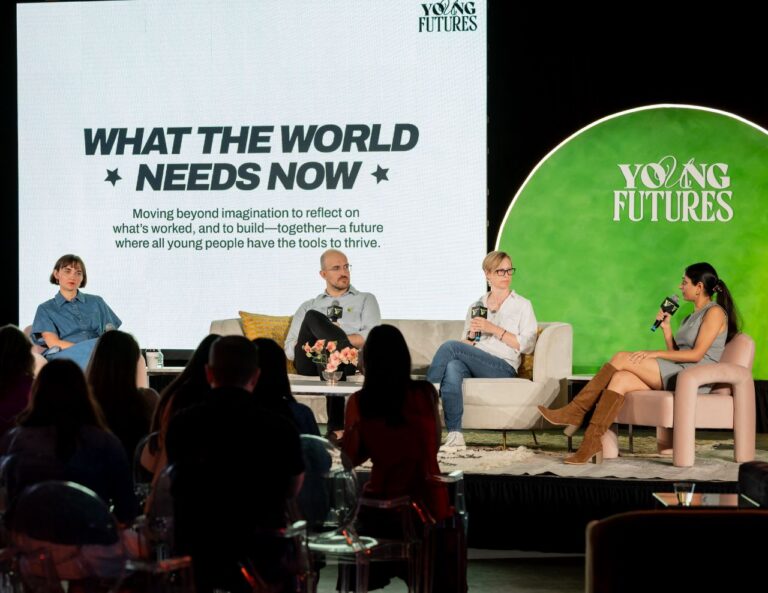
Larz May, from left, Jake Stika, Charlotte Dungan and moderator Trisha Prabhu discuss how organizations can build positive futures for young people during the “What the World Needs Now” panel at the Young Futures Block Party in Austin. (Ben Porter Photography)
That sense of community was a thread running through much of the day’s programming, including a session titled “Ask Lisa (and Dylan) Live!” in which Dr. Lisa Damour and Dylan Keith Humphrey responded to real questions submitted by young people.
Online communities, Dungan added during her panel, hold particular power for young people who might otherwise feel isolated.
“I love how online communities bring people together that would never find each other otherwise, and that’s a powerful thing for quirky, techy kids in particular,” she said. “But it’s also important for students with disabilities who may have limitations and may find limitations in their physical world more obvious, but they do not seem that way online, and they get a lot of support.”
For Dungan, AI is the entry point, but the larger work is something else.
“It just happens to be that I do AI education, but it doesn’t matter that it’s AI,” she said. “What matters is that young people find each other and create solutions to problems in their own lives, and that they know that they are empowered to continue doing that far beyond my program.”
The Block Party also honored the 2026 Young Futures Awardees, powered by Hopelab, welcoming them into the Young Futures Innovators community. The gathering marked the first time all five Young Futures cohorts came together in one place, from Lonely Hearts Club to Oops! AI Did It Again.
For the Mark Cuban Foundation, whose mission is to open doors to AI education for underserved high school students, the Block Party offered a chance to connect with other organizations supporting diverse learners. Banding together with aligned partners allows the foundation to extend the reach of its bootcamps and the long-term mentorship that defines its approach.
That approach is built on partnership, and the Mark Cuban Foundation is actively seeking companies interested in hosting AI bootcamps for high school students in their communities. Host partners provide the space, a connection to local students, and a window into their industry, and, in return, their employees mentor a cohort of teens through a free program that has launched real businesses, real career pivots, and real friendships. Companies that want to learn more about hosting can contact us to get started.