


One teacher put words to a discomfort that several in the room seemed to share. “I know it’s a computer, and yet the way it compliments me, it still strikes me that I’m struggling with that,” the teacher said during a session on artificial intelligence in education. “I can’t meet every need. But AI can meet every need in some ways. It has empathy. And I’m struggling with how human AI is, even though I know it’s a machine.”
A tension ran through the July 14 conversation in Raleigh as part of “From Abacus to Algorithms: Preparing Students in a Digital Age.” It was less about cheating than about what the technology is doing to the relationship between teachers and students. The three-week program is a partnership between the Digital Citizenship Foundation and the William & Ida Friday Institute for Educational Innovation at North Carolina State University’s College of Education. It brings together 25 K-12 educators across grade levels and subject areas for one week of in-person work, followed by two weeks of virtual collaboration.
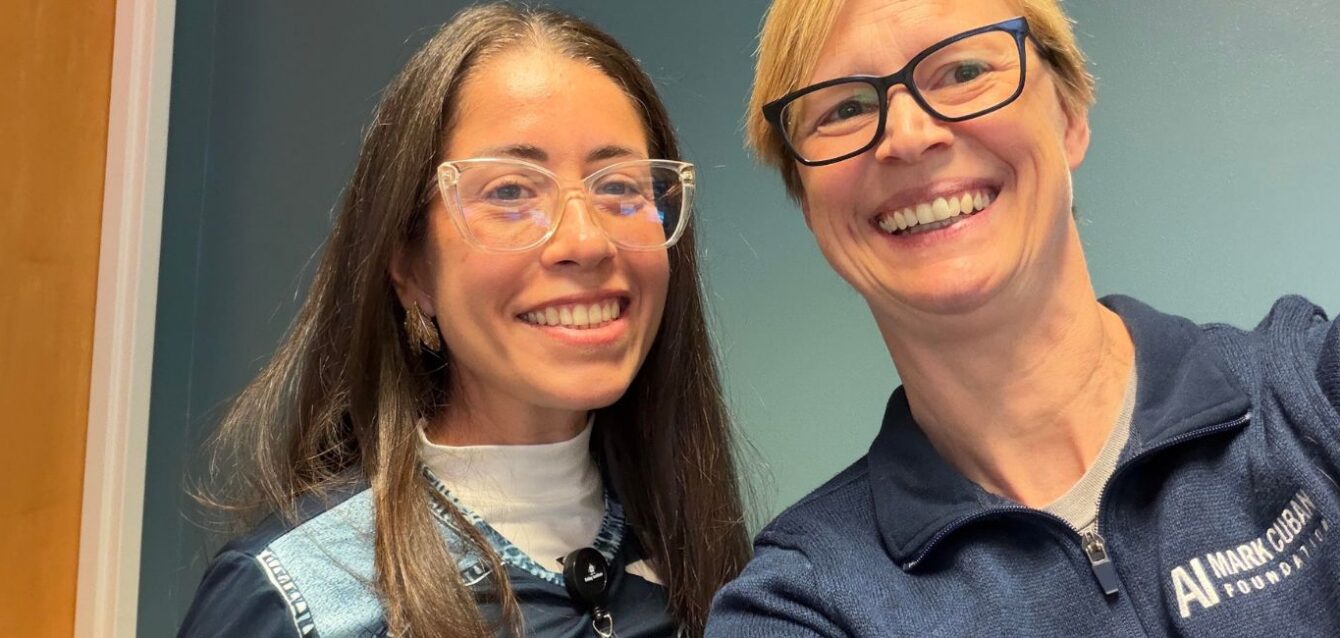
Charlotte Dungan, Chief Learning Officer at the Mark Cuban Foundation, joined Dr. Kip Glazer, Principal of Mountain View High School, for a fishbowl conversation on how educators can teach responsible AI. The format paired an open discussion between the two speakers with time for audience questions. Paola Zarama, a graduate of the foundation’s Teacher Bootcamp who was selected as a Teacher Fellow for the 2026-27 cohort, was among the educators in attendance.
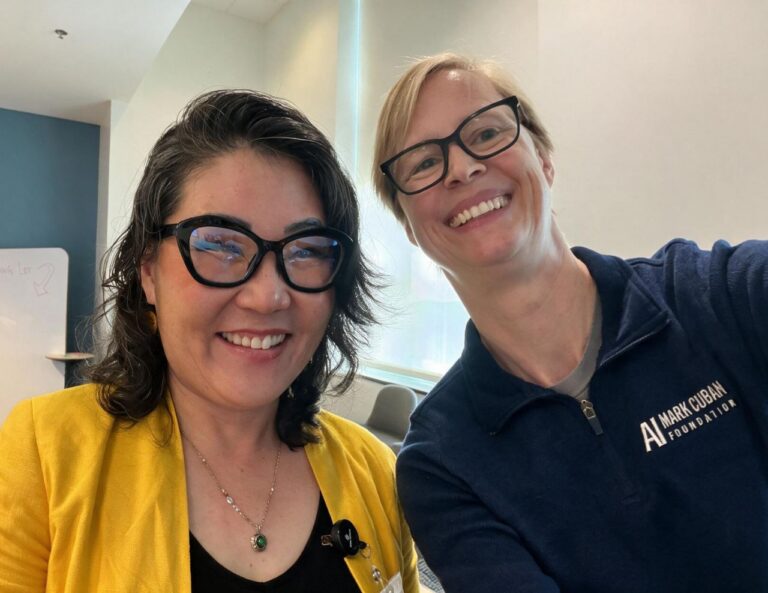
Charlotte Dungan and Dr. Kip Glazer, Principal of Mountain View High School
Much of the discussion centered on the pull teachers feel between wonder and doubt as they weigh what AI can do against what it may cost their students. One participant described the friction of relying on the tools at all. Learning to use AI well can be inefficient, she said, sometimes taking four or five times the effort, and it carries a sense of guilt that she compared to using plastic – cheaper and easier, but at what cost?
Glazer pressed the group to think about values before rules. “Before we have a policy, we have to have a philosophy,” she said, framing much of what followed.
The speakers spent time on why students reach for AI in the first place. Students face full schedules, heavy coursework, and the pressure of extracurriculars, so a shortcut can look appealing even to the most motivated. One observation captured a challenge many teachers recognize. “Never underestimate how hard a student will work to not do an assignment,” a participant said, leading the group to a harder question. What does it take, one teacher asked, to make a student passionate enough to tolerate friction? The emotional stakes complicate the picture further, as perfectionism, competition, and the fear of consequences can make original work feel riskier than the reward it offers.
Dungan used the session to make a specific case. She advocated for a foundational computer science course that includes AI for every student, along with AI integrated across all subject areas, arguing that all students deserve to understand the technologies shaping modern society.
The week in Raleigh made clear how much sits underneath that argument. Teachers are wrestling with the ethical and societal questions AI raises while trying to prepare students for work and lives shaped by tools that keep changing.
Learn more about the Mark Cuban Foundation’s teacher programs at markcubanai.org/teachers.